Natural Highlights: Short-eared Owls


Though frigid weather tempts many of us to stay indoors, winter outdoors in the Mid-South has its compensations. Besides providing a break from summer heat, mosquitoes, and mowing the lawn, winter is great time to observe birds, especially those that are here only in the winter, among them the Short-eared Owl (Asio flammeus).
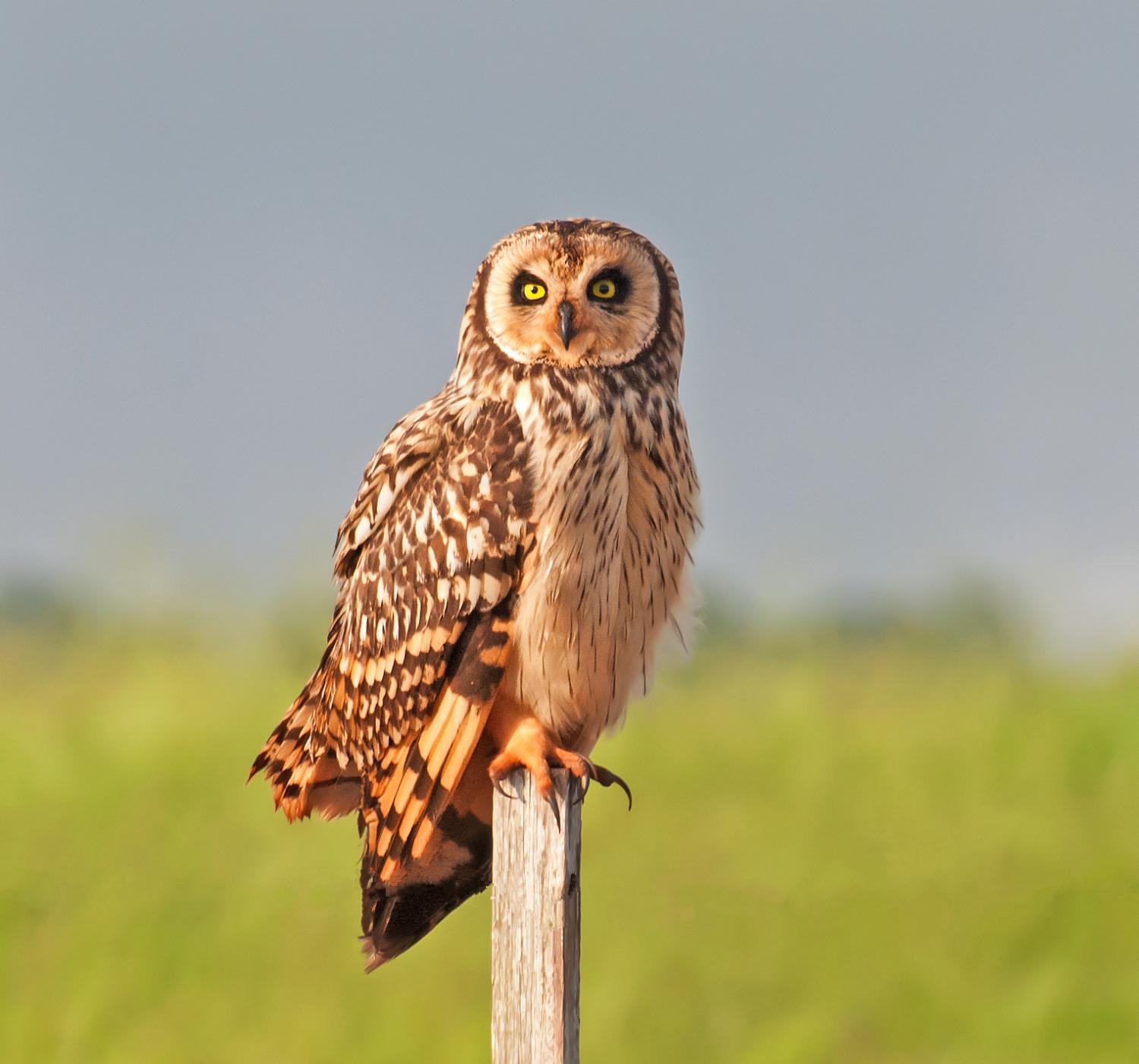
Most folks consider owls charming creatures to look at and the Short-eared Owl is no exception with its large round head, two short “ears” on top, and yellow eyes outlined in black. In the right habitat, at the right time of day, they can be quite easy to see if they are around. Short-eared Owls hunt for rodents (especially voles) and other small mammals and birds in open habitats. Here in our area they can be seen in ag fields and grasslands such as those found along parts of the Wolf River Greenway, in Shelby Farms Park, in the Wolf River Wildlife Management Area, and in other locations in West Tennessee, East Arkansas, and North Mississippi. A few minutes exploring Short-Eared Owl sightings on Ebird.org can point you in the right direction.
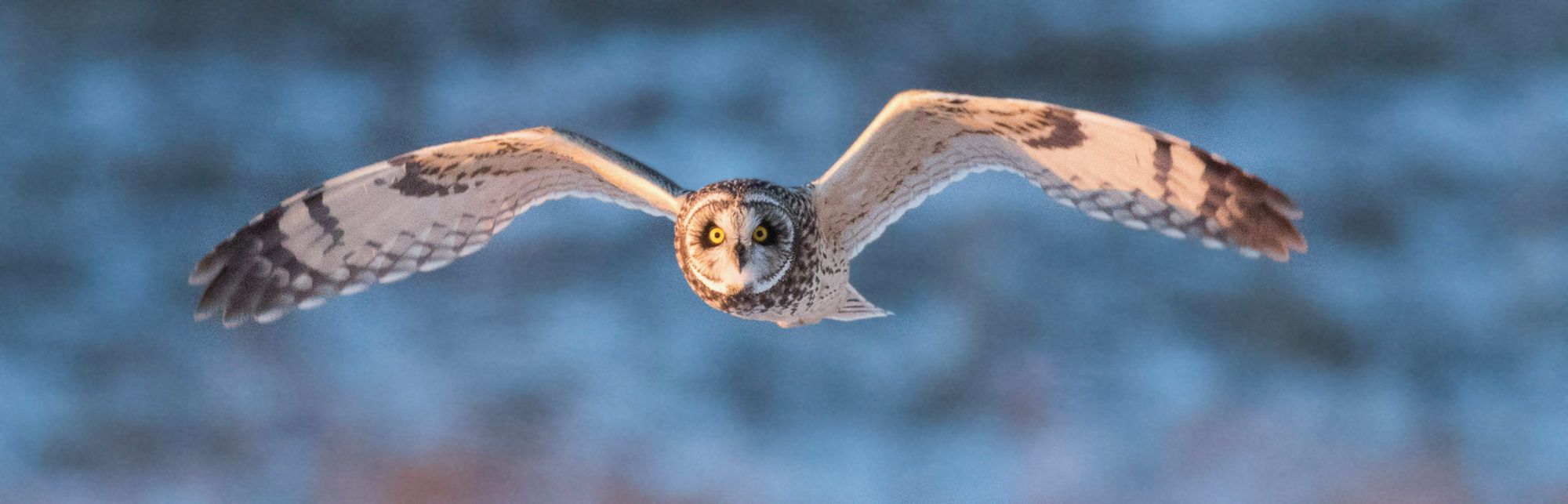
Look for a streaked buffy and brown medium-sized owl flying low over open habitat or perched nearby at dawn or dusk. If you’re really lucky, you’ll be able to see the “ears,” the two small tufts of feathers resembling horns at the top of the head, but they are often hidden. In flight, look for dark bars and a buffy patch on the wings and a distinctive, irregular or moth-like flight pattern.
Short-eared Owls start to appear in the Mid-South in November and leave sometime in March for courtship and nesting much farther north. This is the most widespread owl on earth, documented worldwide except for the Arctic and Antarctica, seen even on islands as disparate as Iceland and the Galapagos. Nonetheless, their numbers have declined steeply in North America, presumably because of a loss of appropriate habitat - another good reason to support land trusts like the Wolf River Conservancy which facilitate the protection of large tracts of connected habitat and a mosaic of habitat types.
For more information on Short-eared Owls, we suggest the following links:
https://www.allaboutbirds.org/guide/Short-eared_Owl/overview
https://ebird.org/species/sheowl
https://www.tn.gov/twra/wildlife/birds/grassland-and-shrub-birds/short-eared-owl.html
Winter in the Mid-South brings Short-eared Owls learn how to spot this elusive species and why protecting open habitat along the Wolf River matters.