Natural Highlights: Water Primrose


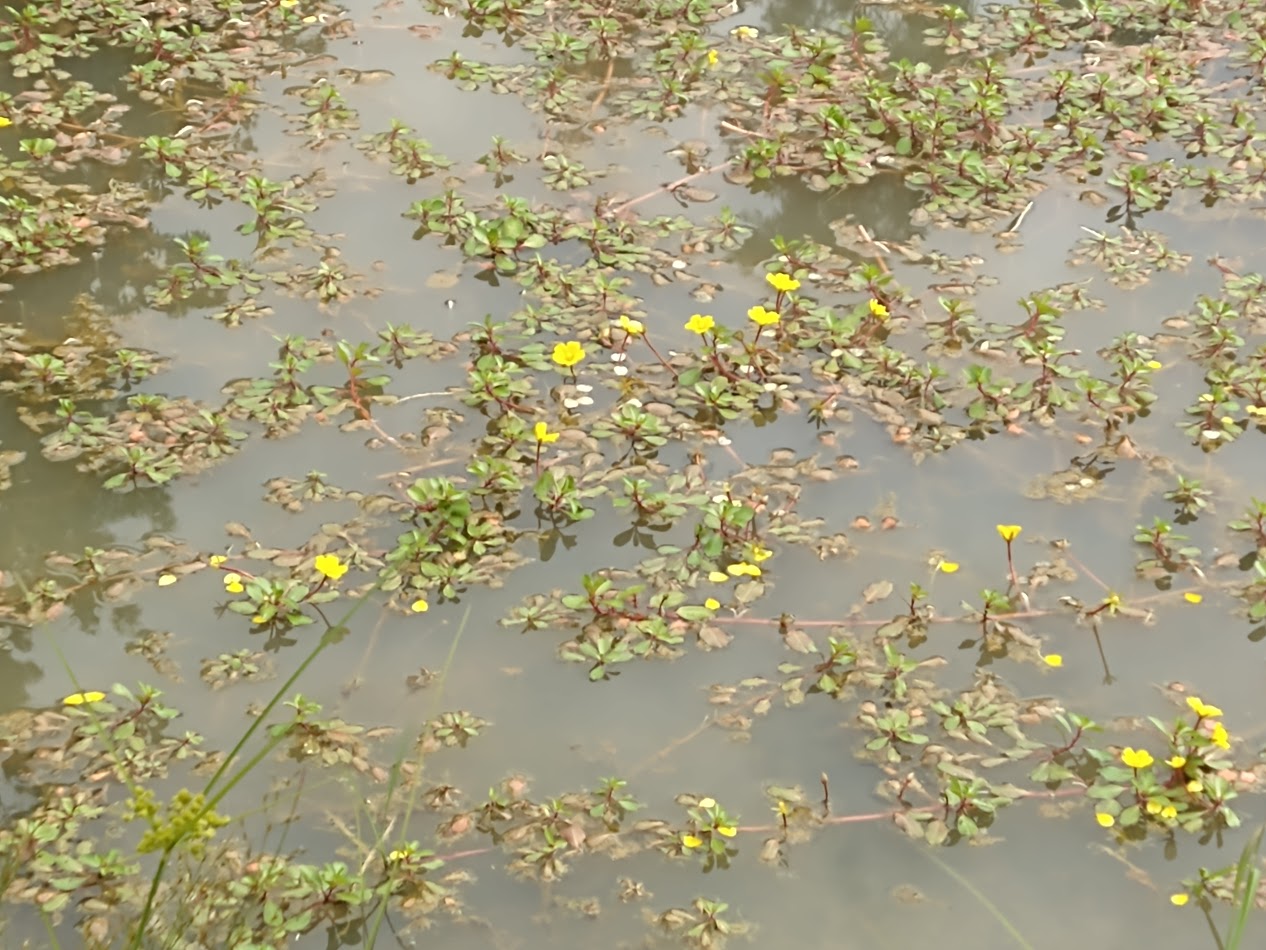
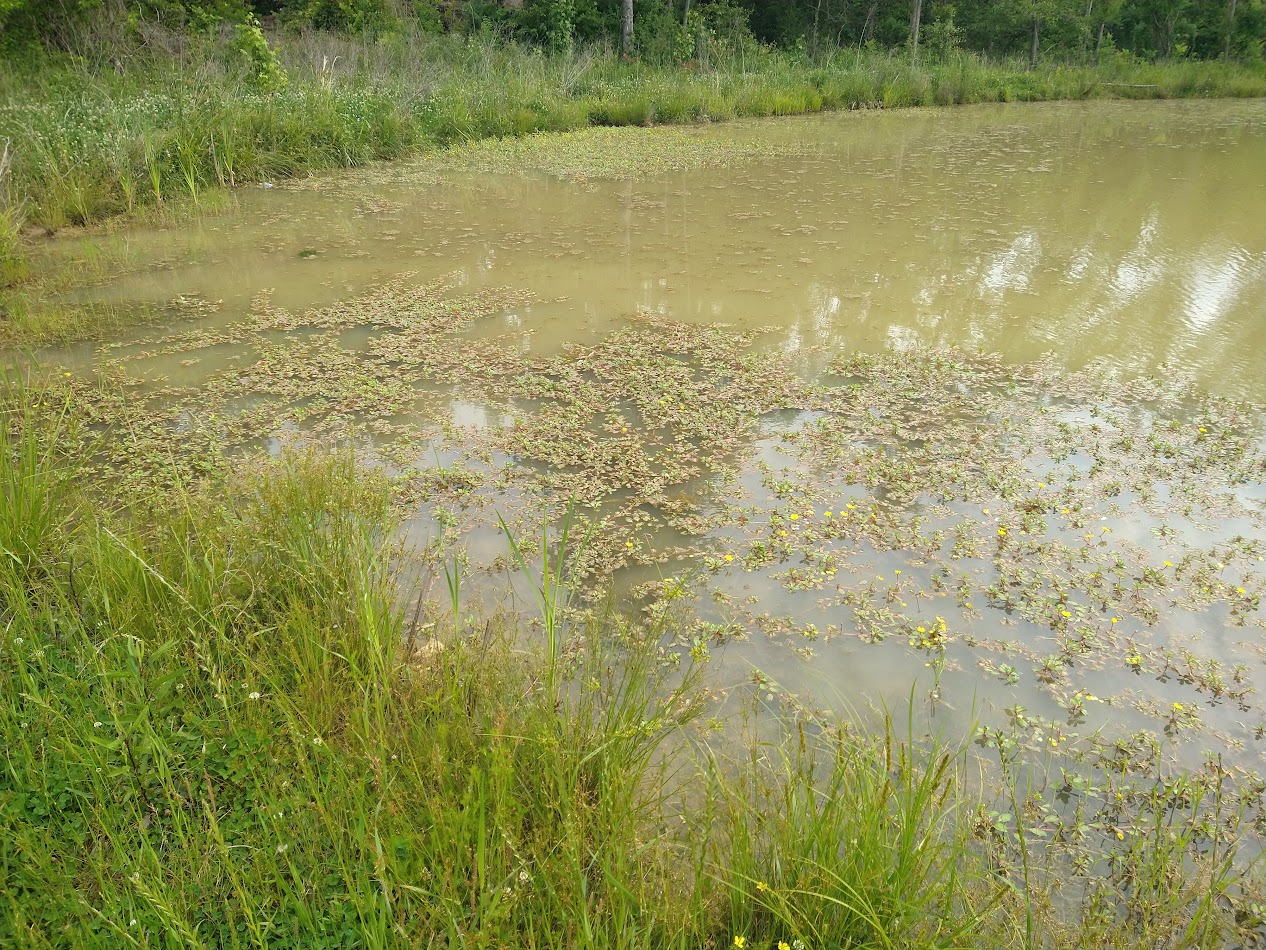
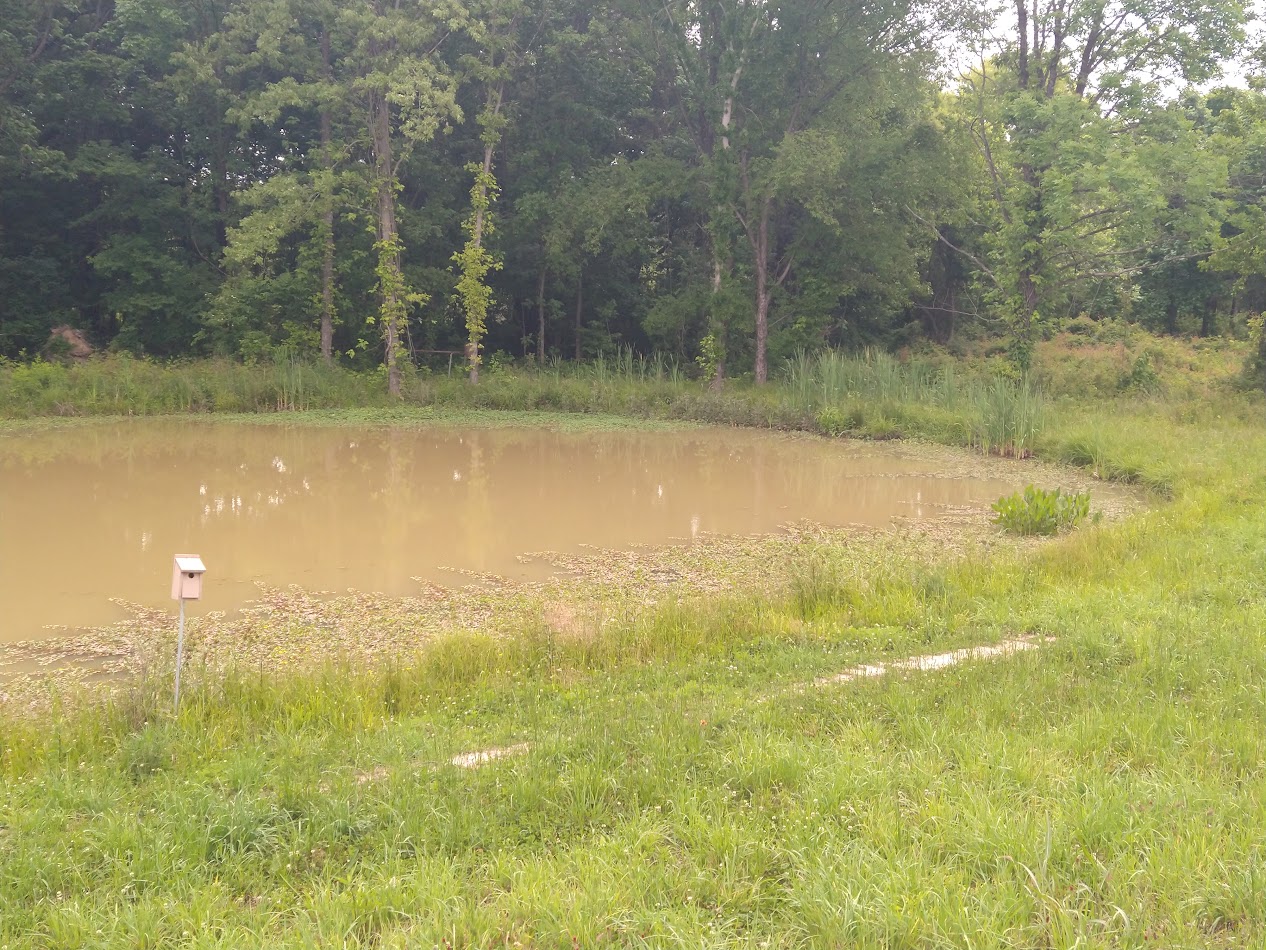
Near the trailhead of the Wolf River Greenway at Epping Way a relatively new pond provides visitors with an interesting view of classic pond succession - the stages by which a pond changes over time from an aquatic to a terrestrial ecosystem. Last year, the pond and its margins looked quite muddy and barren, though algae of various kinds proliferated in the water, helping to support the small fish and tadpoles visible in the murk. This year, an abundance of floating Water Primrose is growing around the pond edges and extending its long stems across the water surface. Emergent plants such as cattails and pickerel weed have also appeared. Water Primrose (Ludwigia peploides) and other aquatic plants provide shelter for aquatic invertebrates which feed young fish and other animals. In the winter, these plants will die back and add their organic matter to bottom of the pond, where we can expect more plants to spread next year.
Also called Creeping or Floating Water Primrose or Primrose-Willow, Water Primrose is a very common native aquatic plant easily recognized by its bright yellow 5-petaled flowers, shiny leaves, and long trailing stems. It can adapt readily to changing conditions, growing upright or creeping along the mud or water surface as needed, as much as 5 to 10 centimeters a day. A single Water Primrose stem can extend as much as two meters over the surface of a pond, and the plant can reproduce through flower pollination and the formation of seed pods, or asexually from a fragment of broken stem. Its flowers are especially important for bees, its seed pods are consumed by waterfowl, its stems protect tadpoles and fish. It also stabilizes the soil and helps to clean polluted runoff.
Because of its rampant growth, Water Primrose often conflicts with human activities like fishing and boating, so it is often considered an invasive pest plant, albeit a native one. It is not native to Europe, however, where it has attained such a bad reputation as an exotic invasive species and a management headache that it has been banned.
At Epping Way, until it becomes necessary to reset the succession clock by removing vegetation or dredging the pond whose primary function is to detain storm water runoff, the Water Primrose is free to follow its ecological imperative, growing like crazy, providing food and shelter to many other organisms, and setting the stage for the successional plant communities to come.
For more information, we suggest these links:
https://mdc.mo.gov/discover-nature/field-guide/water-primrose
https://ludwigiapeploides.com/plant-biology/understanding-ludwigia-peploides-growth-patterns/
Discover pond succession at Wolf River Greenway—Water Primrose and native plants transforming habitat, supporting wildlife, and improving water quality.




.png)