Natural Highlights: Red Swamp Crayfish


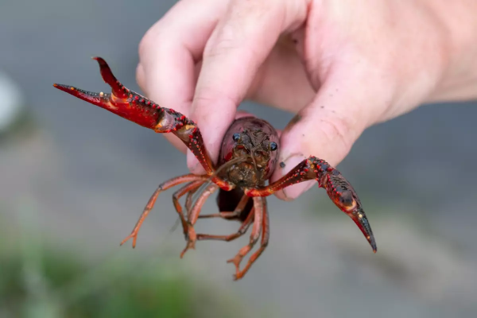
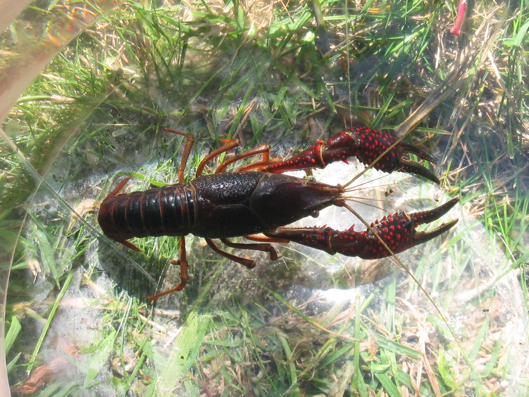
For 17 years and counting, the Annual Frog Chorus Walk has provided participants with the memorable visual and auditory experience of visiting a southern swamp at night from the safety of the Mineral Slough boardwalk. While the frogs are the stars of the show and trying to spot them in the vegetation near the boardwalk is the main activity during the event, there are other equally fascinating creatures in the swamp after dark – roosting birds, Cypress Fireflies, spiders, and snakes to name a few – which often reward patient observers. During this year’s frog walk on May 30, we could shine our flashlights down into the clear, shallow waters of Mineral Slough and see turtles, fish, tadpoles, and several large crayfish with a distinctly dark red hue. Most likely, these were Red Swamp Crayfish (Procambarus clarkii).
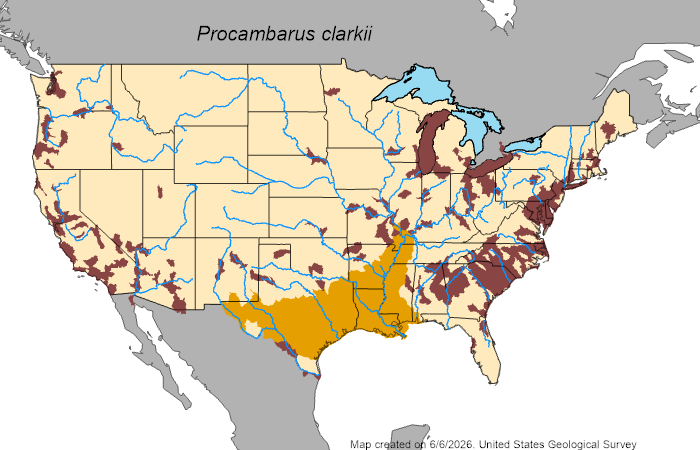
Native to the Gulf Coastal Plain in Texas, Louisiana, and the Lower Mississippi drainage to southern Illinois, the aptly named Red Swamp Crayfish is at home in the Wolf River and its tributaries and wetlands where it serves an important role in our local ecology. An omnivore, it eats and is eaten by just about everything, thus moving a great deal of energy through the ecosystem and sustaining fish, birds, snakes, river otters, raccoons, and more. Also called the Louisiana Crayfish, it is an important aquaculture species which ends up on the plates of millions of people each year. The Red Swamp Crayfish prefers warm, slow-moving waters and sandy or muddy substrate, into which it builds simple burrows.
Unfortunately, the utility of the Red Swamp Crayfish as an aquarium pet, as bait for fishing, and as aquaculture stock has led to its accidental or intentional introduction into many other watersheds in the U.S. and abroad where it is considered an invasive species which causes ecological harm, predating and/or competing with native species of crayfish, amphibians, and fish. Furthermore, the Red Swamp Crayfish’s rapid reproductive rate paired with its intensive burrowing habit can drain wetlands, damage infrastructure, and harm water quality in the places where it does not belong, to such an extent that a great deal of cooperative research is underway to figure out how to eradicate them, which is apparently very difficult.
While those of us concerned with the health of the Wolf River watershed must contend with our own set of pernicious invasive plants and animals - privet, Bradford pear, marsh dayflower, Japanese beetles, emerald ash borers and many more – we can celebrate the Red Swamp Crayfish as an species which belongs here, just another native denizen of the diverse and beautiful wetlands protected by the Wolf River Conservancy.
For more information, visit the following links:
https://nas.er.usgs.gov/queries/factsheet.aspx?SpeciesID=217
https://invasions.si.edu/nemesis/species_summary/97491
https://mdc.mo.gov/discover-nature/field-guide/red-swamp-crawfish
The Red Swamp Crayfish plays a vital role in Wolf River wetlands, supporting wildlife and contributing to a healthy watershed.



.png)