Managing an Expanding Threat: Bush Honeysuckle


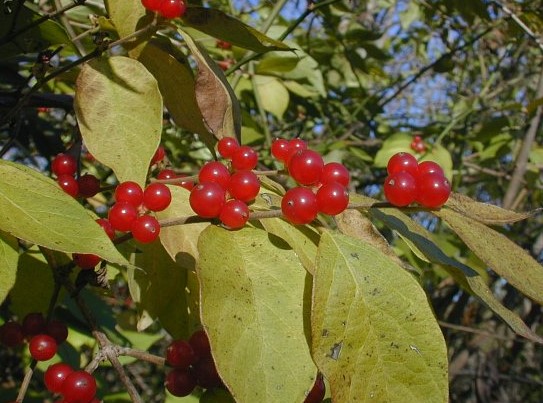
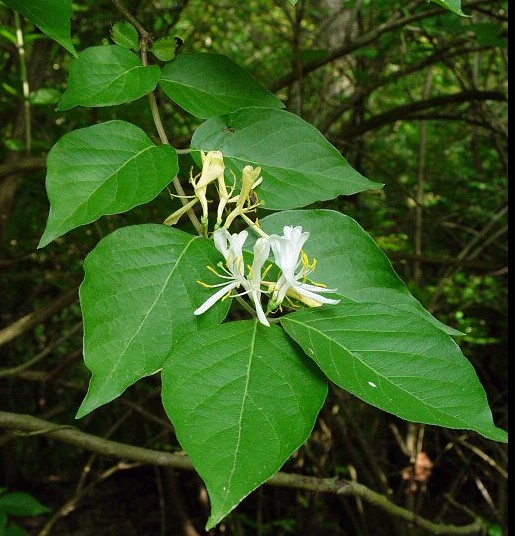
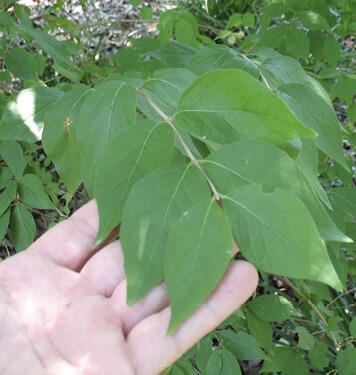
Even in these dog days of summer, the Conservancy continues to manage our conservation properties. Removal of non-native invasive plant species remains a priority throughout the year. Recently, we have been focusing on treatment (cut-stump herbicide application) and removal (pulling) of one species that we have increasingly noted — bush honeysuckle. There are several species of honeysuckles that form bushes, but the primary culprit that escapes the Mid-South is Amur Honeysuckle (Lonicera maackii). That being said, we discourage homeowners, gardeners, and landowners from purchasing any species of bush honeysuckle (including Tartarian Honeysuckle Lonicera tatarica, Morrow’s Honeysuckle Lonicera morrowii, and Bella Honeysuckle Lonicera × bella, which is a hybrid of the Morrow and Tartarian). All of these species have shown the same invasive characteristics across the eastern half of the U.S.
Why Bush Honeysuckle Is Bad for the Local Ecology
These species may look nice in bloom and in fruit in the landscape, but they can quickly escape when birds eat the fruit and expel the seeds into forests. These plants have a fast growth rate, leaf out earlier than most understory species, and hold their leaves later into the fall. This gives them a competitive advantage versus native understory trees and shrubs. In the Wolf River watershed, Conservancy staff have noticed that these non-native invasive plants prefer sites where the hydrology has changed due to river channelization. Areas like the Lucius E. Burch State Natural Area along the Wolf River floodplain — already affected by heavy infestations of Chinese Privet (Ligustrum sinense) and Japanese Stiltgrass (Microstegium vimineum) — now have bush honeysuckle species taking hold, occupying space needed for native species regeneration.
What Can the General Public Do About It?
As mentioned above, please do not purchase any species of bush honeysuckle. Also, encourage sellers of those plants (when you find them in a plant nursery) to not keep that species in stock and to choose more native shrub species, such as American Hazelnut (Corylus americana) and Common Buttonbush (Cephalanthus occidentalis). You can also join the Conservancy’s service projects (Wolf River Restoration Series) or request that your place of business make a small donation to WRC and have an offsite outing to pull and cut invasive species.
Additional Resources
https://extension.msstate.edu/publications/amur-honeysuckle
https://mdc.mo.gov/discover-nature/field-guide/bush-honeysuckles
The Conservancy combats invasive bush honeysuckle across the Wolf River watershed, protecting native habitats and encouraging community stewardship.



.png)