Natural Highlights: Osprey


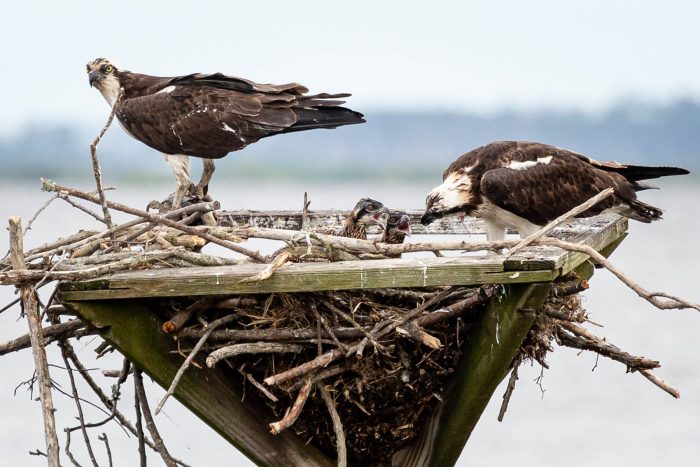
By September many bird species are making their way south to habitats and resources which can sustain them through the winter months. Among them is the Osprey (Pandion haliaetus carolinensis), a large bird of prey with a taste for fish. An osprey can dive no more than about three feet to catch a fish it has spotted from the air. If the fish move deeper as the seasons and water temperatures change, ospreys must find them elsewhere. Female ospreys begin migrating in August, preceding the males which begin in September, apparently to help support the year’s offspring for another month. Most ospreys which nest in North America winter in Central and South America.
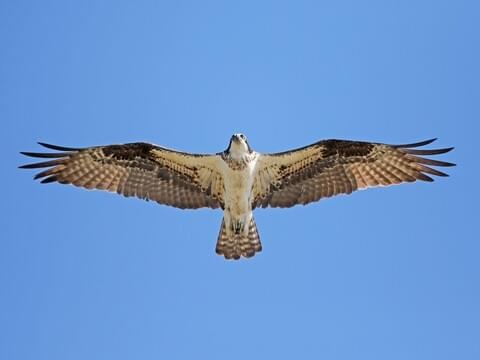
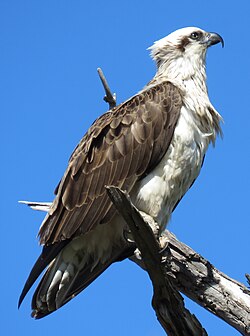
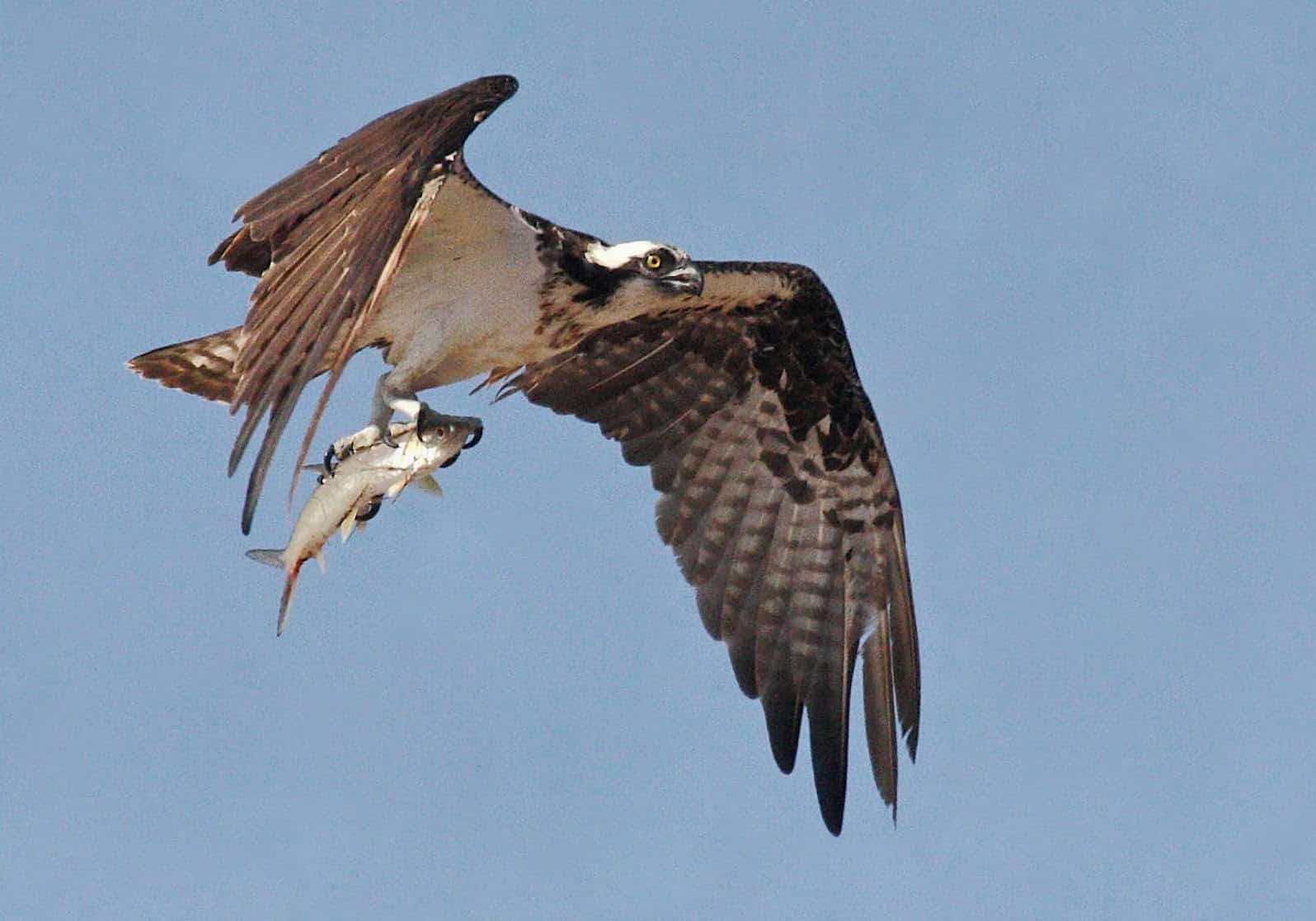
Observed regularly but not frequently in the Midsouth (you can check local sightings on eBird.org) osprey can be seen near our rivers, lakes, and reservoirs, easily recognized by the black “wrists” and “kinks” in their wings, their black and white heads, their repetitious calls, and their behavior as they scan and dive for fish. Ospreys improve the aerodynamics of carrying a captured fish by holding it with its head pointed in the direction of flight, with one foot placed on the front of the fish and one toward the tail. This is facilitated by a unique reversible outer toe, which separates it structurally from the hawks with which it was formerly grouped. Now, ospreys have been deemed sufficiently distinct to be placed in their own family, the Pandionidae, as its only living species. There are four osprey subspecies corresponding to the broad geographic areas of Eurasia, Australasia, the Caribbean, and North and South America.
Ospreys will readily use artificial nesting platforms and other manmade structures when available, and they will return to the same site year after year, adding materials until a nest becomes quite large and deep, up to 13 feet! A pair raises just one brood of young every year and survivorship of all 2-4 nestlings depends on the food supply; if it’s low, one or more chicks may starve. During the decades when DDT was in use as a pesticide, there were very few nestlings at all because the eggs were so fragile they often broke before hatching – such was the effect of the chemical on calcium absorption in birds of prey. Osprey populations plummeted as did those of many other raptors. The DDT had washed from farm fields into waterways where it contaminated the fish and poisoned the birds which ate them. Fortunately, DDT was banned and ospreys are once again abundant, especially along our coastlines and near large bodies of water. You can see them along the Wolf River, too, which the Wolf River Conservancy is dedicated to protecting as a sustainable natural resource with excellent water quality and healthy wildlife, including plentiful fish for ospreys.
For more information, please visit these links:
Learn how osprey migration reflects healthy waterways and discover where to spot these remarkable birds locally.




.png)