A Beginner's Guide to Chicken of the Woods


The season of feasting in upon us, so what better time to talk about Chicken of the Woods, an edible fungus prized by foragers? Named for its chicken-like taste and texture, Chicken of the Woods (Laetiporus sulphureus) is one of about seven similar species in North America. It is a polypore mushroom, also called bracket or shelf fungi, which disperses its spores from tiny pores on the fruiting body instead of gills, an important feature for distinguishing it from other types of mushrooms.
Any discussion of edible fungi must be prefaced with the warning that misidentifying and then consuming mushrooms can be deadly! It is always best to rely on experts to be certain. And although Chicken of the Woods is fairly easy for beginners to identify, it can cause an allergic reaction when eaten by some people, usually nausea or other G.I. issues. Caution is advised.
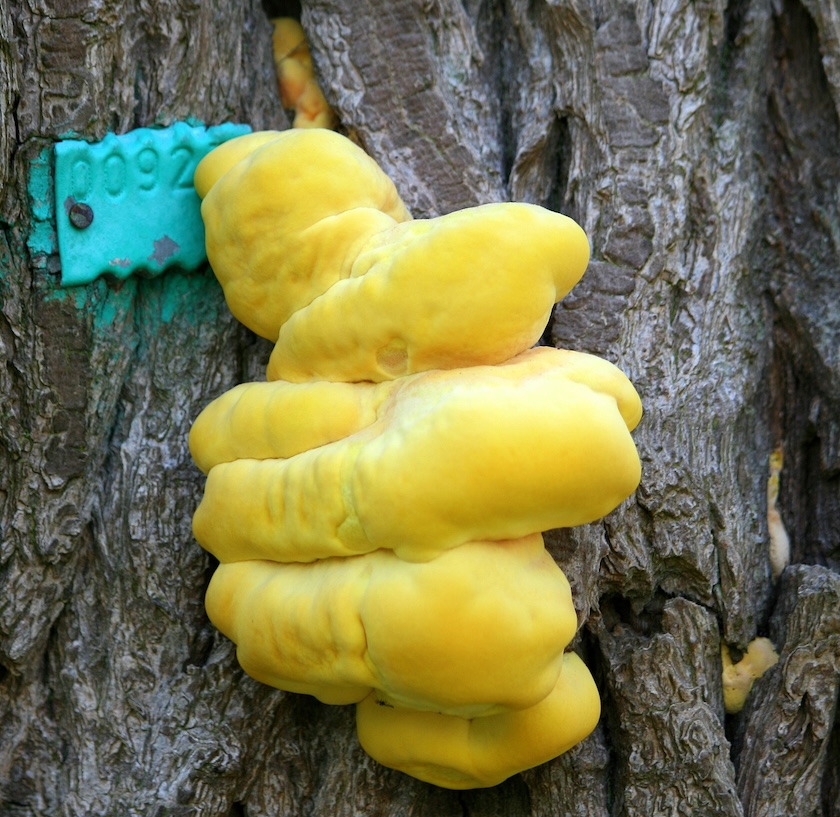
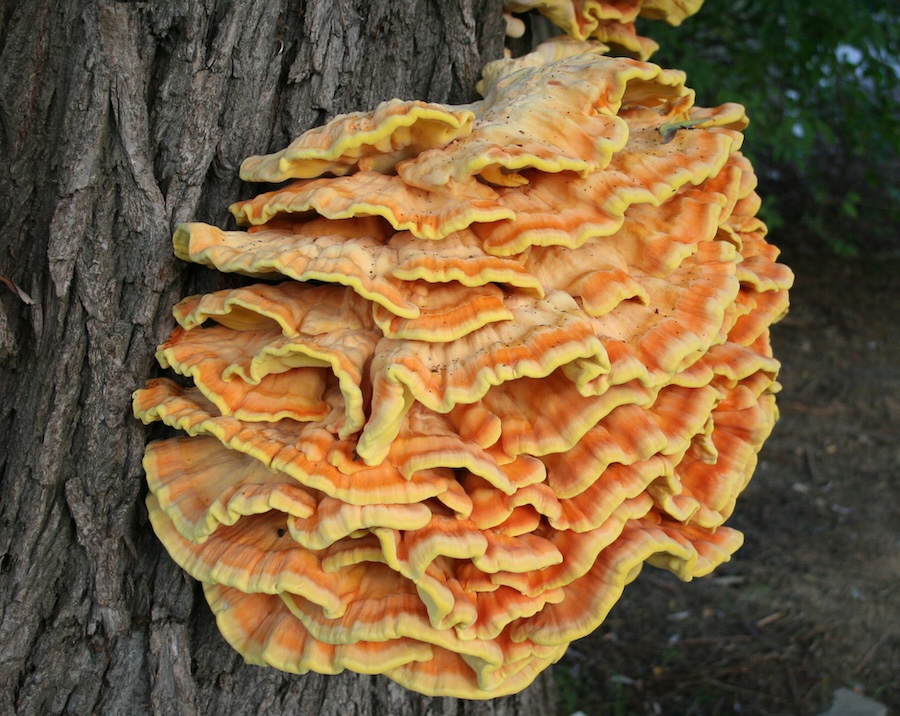
Chicken of the Woods, also called Chicken Fungus, Chicken Mushroom, and Sulphur Shelf, is typically a bright orange and yellow shelf fungus found growing near the base of hardwood trees, especially oaks, and especially dead and dying trees. These are fungi after all, which derive sustenance by decomposing organic material such as wood. This is an essential function in any ecosystem, returning once-living organisms to the soil where their nutrients will support new life. Young Chicken of the Woods look a bit cyst- or bubble-like as they arise from the mycelia embedded in the tissue of a tree. They mature into fleshy shelves from 2 to 10 inches wide, with colorful concentric rings of orange fading to yellow on the outer ring. There may be multiple shelves in large specimens; the largest Chicken of the Woods on record weighed 100 lbs.! The fungus is only edible when young, fleshy and moist, not when the shelves have become dry and tough, and it must be thoroughly cooked to break down the chitin in the fungal fibers.
It has been a dry fall, but perhaps you’ll encounter a Chicken of the Woods fungus on a pre- or post-Thanksgiving walk this year or think of it as you sit down to your turkey dinner. Like many other organisms, Chicken of the Woods needs native hardwood trees and diverse natural habitat to thrive, all of which in turn requires a commitment to conservation. That’s what we’re thankful for at Wolf River Conservancy.
Please see the following links for more information:
https://www.mushroom-appreciation.com/chicken-of-the-woods.html
https://en.wikipedia.org/wiki/Laetiporus
https://www.youtube.com/watch?v=LJwirk5Pjik
https://www.mushroomexpert.com/polypores.html
Learn how to identify Chicken of the Woods and why healthy forests are essential for this fascinating fungus.